
"from Central America"
4000 article(s) found

Characteristics of coffee beans from three regions-Characteristics of coffee beans from Central and South America
Characteristics of coffee beans from three regions-Characteristics of coffee beans from Central and South America Arabica Arabica beans, world-famous blue mountain coffee, mocha coffee, etc., almost all Arabica species. Appearance: bean shape smaller, positive was long oval, narrow and tortuous cracks in the middle, beans back arc shape more flat, consistent size, uniform color luster. Origin: Arabica coffee

The mild Salvadoran coffee is characterized by excellent balance and is a specialty of Central America.
El Salvador coffee with mild taste is one of the small countries in Central America with a densely populated population. The flavor of its coffee is characterized by excellent balance. Today, this coffee accounts for 40% of the country's exports. 35% of the extra hard beans of the best coffee are exported to Germany from January to March. In the early 1990s, guerrilla warfare greatly damaged the country's national classics.

An introduction to the coffee producing countries of Honduras in the mountainous countries of Central and North America
Honduras is a mountainous country in Central and North America, with a population of more than 8.3 million and an area of about 112000 square kilometers. Located in the north of Central America. It is bordered by the Caribbean Sea to the north, the Gulf of Fonseca in the Pacific Ocean to the south, Nicaragua and El Salvador to the east and south, and Guatemala to the west. More than 3/4 of the territory are mountains and plateaus. The mountains extend from west to east, inland is a lava plateau, mountainous

Coffee in Central America introduces the name and cultivation of coffee producing areas in seven countries.
For professional baristas, please follow the Coffee Workshop (official Wechat account cafe_style) 200Coffee School the land bridge between Central America and North and South America, there are seven countries: Belize, Costa Rica, El Salvador, Guatemala, Honduras, Nicaragua and Panama. Coffee is produced in seven Central American countries, including Guatemala, Costa Rica and Honduras.

The Honduran Coffee region of Central and North America introduces boutique coffee.
Honduras is a mountainous country in Central and North America, with a population of more than 8.3 million and an area of about 112000 square kilometers. Located in the north of Central America. It is bordered by the Caribbean Sea to the north, the Gulf of Fonseca in the Pacific Ocean to the south, Nicaragua and El Salvador to the east and south, and Guatemala to the west. More than 3/4 of the territory are mountains and plateaus. The mountains extend from west to east, inland is a lava plateau, mountainous

Honduras, a coffee producing country in Central and North America
Honduras is a mountainous country in Central and North America with a population of more than 8.3 million and an area of about 112,000 square kilometers. Located in northern Central America. It is bordered by the Caribbean Sea to the north, the Gulf of Fonseca in the Pacific Ocean to the south, Nicaragua and El Salvador to the east and south, and Guatemala to the west. More than three-quarters of the territory is mountainous and plateau. Mountains extend from west to east, inland for lava plateau, mountainous

Nicaragua's poorest coffee plantation in Central America Joy coffee plantation Climate altitude profile
Nicaragua is located in central Central America, bordered by the Pacific Ocean to the west and the Caribbean Sea to the east. North central highlands, coastal plains to the east, is part of the Central American volcanic belt. The eastern plain is hot and rainy, and has a tropical marine climate. Suitable climate provides a good growing environment for coffee cultivation. High quality Nicaragua coffee, grown in the north and centre of the country. Coffee is black.

Sweet flavor nurtured by microclimate in the main coffee producing areas of Central and South America, Panama coffee bean producing areas.
Professional coffee knowledge exchange more coffee bean information please follow Coffee Workshop (Wechat official account cafe_style) Front Street-Panamanian Coffee introduction Central America has the natural advantages of sunshine, land, and mountains, and an abundant labor force, the region is uniquely blessed to grow and produce high-quality coffee. In the late 19th century, coffee had become a source of economic growth in Central American countries.

El Salvador, a coffee producer in Central America with a mild taste.
Unique, mild-tasting coffee. El Salvador is one of the small countries in Central America with a dense population. The flavor of its coffee is characterized by excellent balance. Today, this coffee accounts for 40% of the country's exports. 35% of the extra hard beans of the best coffee are exported to Germany from January to March. In the early 1990s, the guerrilla war greatly damaged the country's national classics.

Martinique is a small island and the birthplace of coffee in Central America.
Martinique is a small island and the birthplace of coffee in Central America, but it produces very little coffee today. The first coffee tree in the Western Hemisphere was brought from France by GabrielMathieudeClieu in the early 1820s. In his early years, Dirkley was a naval officer in Martinique. He brought back a coffee tree and planted it in Pritchell.

Martinique is an island and the birthplace of coffee in Central America.
Martinique is a small island and the birthplace of coffee in Central America, but it produces very little coffee today. The first coffee tree in the Western Hemisphere was brought from France by GabrielMathieudeClieu in the early 1820s. In his early years, Dirkley was a naval officer in Martinique. He brought back a coffee tree and planted it in Pritchell.
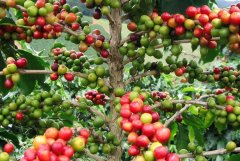
Martinique is an island and the birthplace of coffee in Central America.
Martinique is a small island and the birthplace of coffee in Central America, but it produces very little coffee today. The first coffee tree in the Western Hemisphere was brought from France by GabrielMathieudeClieu in the early 1820s. In his early years, Dirkley was a naval officer in Martinique. He brought back a coffee tree and planted it in Pritchell.
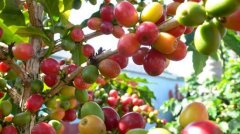
Martinique coffee beans are also the birthplace of coffee in Central America.
Martinique is a small island and the birthplace of coffee in Central America, but it produces very little coffee today. The first coffee tree in the Western Hemisphere was brought from France by GabrielMathieudeClieu in the early 1820s. In his early years, Dirkley was a naval officer in Martinique. He brought back a coffee tree and planted it in Pritchell.

Nicaragua Coffee, Central America's Poorest Coffee Producer
Nicaragua is now one of the poorest countries in Central America. Because of its poor economic base, the coffee industry is still in a relatively backward state, while coffee farmers are in an extremely poor state. Fortunately, Nicaragua's coffee has received some foreign aid funds to improve the quality of its coffee. Nicaragua's Madagerba, Chinodega, Segovia region of coffee

IMPCT coffee concept hall helps children in Central and South America flip education
Professional barista exchanges, please pay attention to coffee workshop (Weixin Official Accounts cafe_style ) IMPCT opens its first coffee concept hall in Taiwan, and the proceeds will be used to cover kindergartens in Central and South America. Global coffee consumption has been rising in recent years, but farmers in many coffee-producing countries remain below the poverty line and have not benefited from increased coffee consumption.

Costa Rica, the first country in Central America to grow coffee, grows youdao.
For more information on coffee beans, follow the Coffee Workshop (official Wechat account cafe_style), the first country in Central America to grow coffee; government support for development began in Costa Rica in 1729, when it was introduced from Cuba. This made Costa Rica the first country in Central America to grow coffee and the first to grow coffee because of its commercial value.

Introduction of Nicaraguan Coffee Manor Los Congo Manor in Central Central America
Nicaraguan coffee is grown in fertile volcanic soil, and SHG is the best harvested from 1500 to 2000 meters above sea level. The local climate belongs to alpine terrain, which is surrounded by thick fog throughout the year and covers the whole mountain forest, resulting in a low-temperature and humid climate. Years of mating evolution of tree species, coupled with insisting on the ancient and time-consuming treatment process, retain natural acidity and strong aroma, and shade is used.

Introduction of boutique coffee in Matagalpa in Central America and Nicaragua
In many countries, coffee production will be seriously affected for political reasons. Nicaraguan coffee industry is no exception. The 1979 revolution forced coffee planters to flee to Miami. A period of indecision followed, when the government considered whether to redistribute land (including many plantations), which led to a shortage of coffee and a decline in production since the early 1970s

Description of Latin American coffee flavor, introduction of Latin American coffee
The characteristics of the flavor of Central and South America: balanced, moderately sour and mellow Central and South America is the world's largest coffee producing area, where there are numerous boutique coffees. Take Colombia, Guatemala or Brazil as an example, good coffee is enough to make people dazzling. What is the resource advantage that makes Central and South America so good? French naval officer Gabriel Ma in 1721

The Coscarpa region of El Salvador, a small coffee-producing country in Central America
It is one of the small countries in Central America with a very dense population. People here love coffee. The coffee in El Salvador tastes well balanced. Salvadoran coffee exports account for 40% of the country's exports. The best quality coffee is exported from January to March each year, and 35% of the extra hard beans are exported to Germany. In the early 1990s, due to the impact of the war, El Salvador's national economy